By: Mordy Friedman
The Great Detour: Did We Do Space Out of Order?
The grainy, black-and-white image of a boot print on lunar dust is etched into our collective consciousness. It represents one of humanity’s most singular achievements, a testament to ingenuity, courage, and sheer force of will.
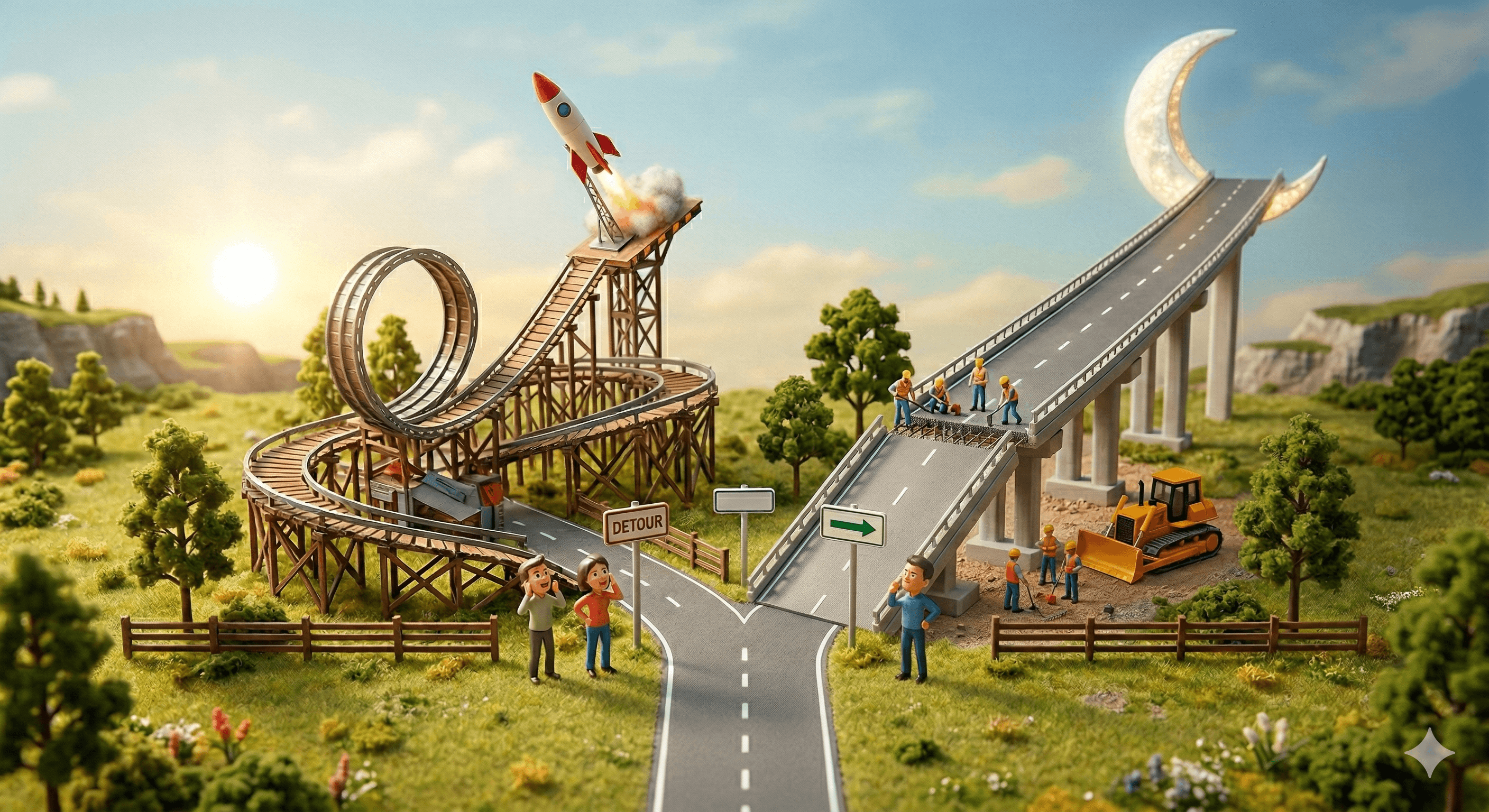
We reached for the heavens and touched the Moon. But in our haste to win a geopolitical race, did we take a magnificent detour, skipping the foundational steps needed to truly become a spacefaring species? The argument is a compelling one: are we doing space out of order?
The leap first, build the bridge later approach has defined our relationship with space for over half a century. It created a legacy of staggering costs, inefficiency, and a pace of progress that feels frustratingly slow.
The Pioneer Pattern
Perhaps this leap first, build the bridge later approach isn't unique to space. It may be a fundamental pattern of human exploration. We sail across oceans in rickety ships long before we engineer massive container vessels and deep-water ports. We follow rugged trails through mountains before we blast tunnels and pave highways.
Humans are pioneers first and civil engineers second. We are driven by the horizon, by the desire to get there, and we often figure out the logistics later. From this perspective, the space race wasn't an anomaly but the ultimate expression of our pioneering spirit.
The intense pressures of the Cold War provided the necessary catalyst. It unlocked a level of political will and public funding that would have been unimaginable in peacetime, all focused on a single, glorious finish line: to plant a flag.
It was a trade-off. The race gave us the initial push needed to break the bonds of gravity, but it saddled us with a difficult and inefficient legacy. It proved what was possible but didn't provide a practical map for how to do it sustainably.
An Industry Built Around a Bottleneck
This leap first, build the bridge later legacy has defined our relationship with space for over half a century. Think of how other great frontiers were opened. The American West wasn't truly settled by sending a few, single-use wagons on a one-way trip to California.
It was opened by the slow, methodical laying of railroad tracks. Infrastructure had to come first, and only once the tracks were laid, an entire ecosystem of towns and industries blossomed organically along the route.
Space development has been the inverse. We built the destination getting there on an adrenaline rush, and the entire industry was then forced to build itself around this fundamental bottleneck. Instead of a cheap, reliable railroad to orbit, we have inefficient rockets it’s like commissioning a new Bugatti for every single trip you take across town.
This has created what can only be described as a high ticket market for everything related to space. Every component must be exquisitely engineered, and every launch is a massive gamble. This reality throttles innovation. We have a system that supports monumental, but infrequent, achievements, rather than a system that encourages widespread, everyday use and development.
Correcting the Course
The challenge now is transitioning from the pioneer phase to the settlement phase. We've proven we can visit the new worlds, and the value they have; now we have to build the roads and cities.
Fortunately, that transition is beginning. The rise of commercial spaceflight, with the focus on reusability, is the first real attempt to build the missing infrastructure. This is the paradigm shift. It moves the focus from building a single, perfect spacecraft to creating a reliable and affordable transportation system that countless others can use.
The next major step, to fully build the highway, is the space elevator. This is the ultimate vision of the infrastructure-first approach: a permanent, continuous link to orbit that would finally turn space access from a dramatic event into a mundane utility.
We may never know what a more deliberate, non-politicized path to space would have looked like. But we know where the path we took has led us. We stand in a time of incredible potential, recognizing the limitations of our first steps and finally beginning the crucial work we skipped. The great detour may be ending, allowing the real journey to finally begin.
Back